
News
EXCLUSIVE | “Everything Fell Apart After Muabe Left” Coach Nisthar Opens Up on Green Streets’ Relegation
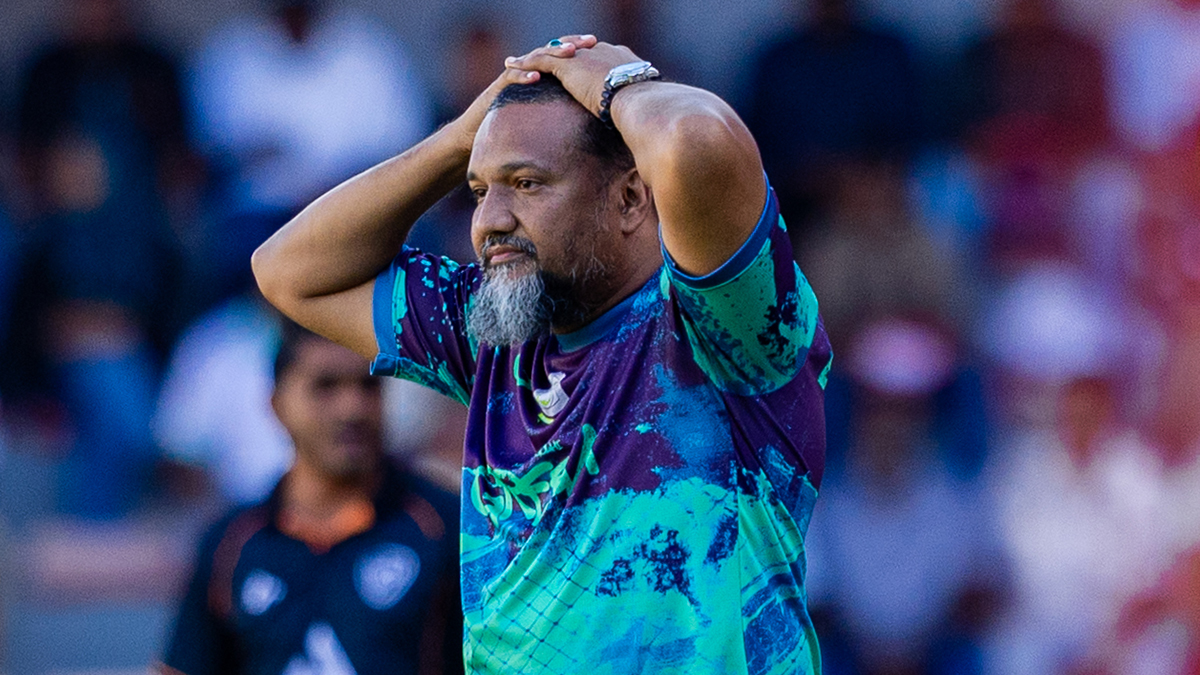
Green Streets head coach Ali Nisthar Mohamed has pointed to the departure of President Muaviyath Khaleel as the turning point in the club’s dramatic relegation, saying the support structure around the team collapsed and ultimately led to their downfall.
In an exclusive interview, Nisthar reflected on a disappointing campaign that saw Green Streets relegated from the Dhivehi Premier League qualifiers despite entering the season with hopes of competing at the top end of the table.
According to the coach, the warning signs emerged early in the season following defeats to Valencia and Victory.
“I told the team that if this seriousness didn’t change, we might face relegation,” he said.
Nisthar revealed that poor training attendance, salary-related issues, players struggling to obtain time off work, and the absence of a promised foreign goalkeeper severely affected the team’s performances. He also said his request for a dedicated goalkeeping coach was never fulfilled.
“After Muabe stepped down, the team behind the team never regrouped,” he said, stressing that the problems extended far beyond the players on the pitch.
Despite acknowledging the difficult circumstances, Nisthar accepted responsibility for the team’s relegation.
“Of course, the coach must take responsibility, I understood the difficulties, but I stayed because Muabe requested me. I am loyal to him because he was there for me when I needed support.”
Looking ahead, the experienced coach urged Green Streets’ players not to let relegation define their careers.
“Stay in the division and dream big. Aim for the national team. You are too talented to stay down. Get up and become even better, inshaAllah.”
He also thanked the club’s supporters, saying they deserved much better and expressing hope they would continue backing the team in its bid to return to the top flight.
Nisthar believes Green Streets’ struggles were not due to a lack of talent but a lack of support from management.
“A team is not just players. They must be supported by strong management,” he said.
The coach also spoke about a controversial refereeing decision during Green Streets’ match against Dhidhdhoo, claiming a disallowed goal convinced him the team would not survive.
He said he has repeatedly watched the incident and believes the goal should have stood, while calling on the Football Association of Maldives to ensure greater accountability among match officials.
“Talking about it won’t change the fact that we are down, but I hope the referees are held accountable,”
For Green Streets to recover, Nisthar believes the club needs committed leadership capable of supporting players on and off the field.
He stressed the importance of timely financial support, stronger communication with players and rebuilding the passionate fan culture that once gave the team a significant boost.
Regarding his own future, Nisthar said discussions with the club’s chairman are yet to take place, but admitted he hopes to remain coaching in the Premier League.
He also reiterated his long-standing support for introducing a home-and-away league format, describing it as an important step for the development of Maldivian football.
In his closing remarks, Nisthar raised broader concerns about the future of local coaching, saying Maldivian clubs continue to favour foreign coaches despite the growing quality of home-grown talent.
As a coach instructor himself, he believes the next generation of Maldivian coaches has enormous potential but needs opportunities to prove themselves.
“We have many talented young coaches—better than our generation. I hope we can do a better job so managements trust local coaches and give them the opportunities they deserve.”




News
From SAFF Heartbreak to Dominance: Maldives U20 Roar Back
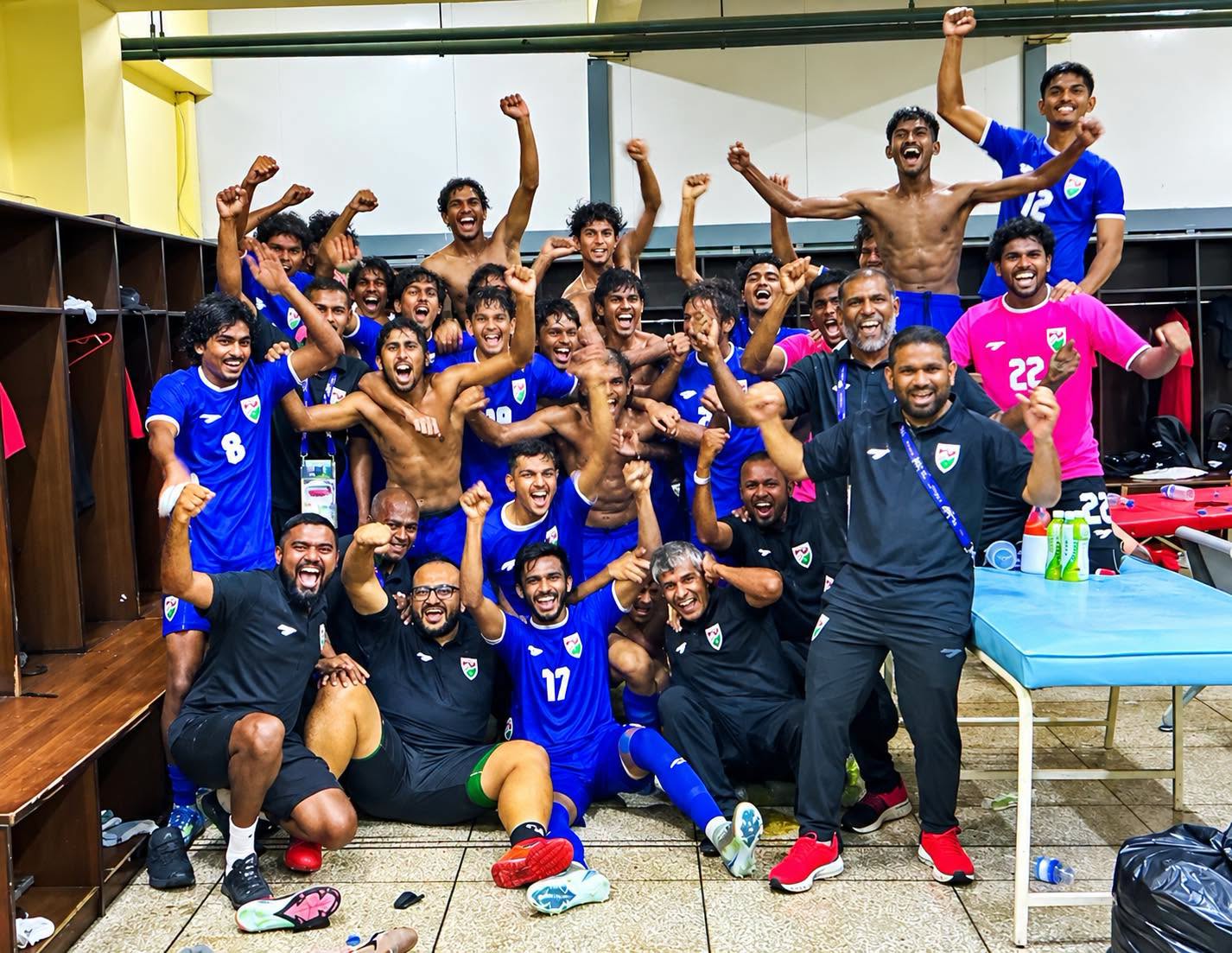
The Maldives Under-20 national team responded emphatically to recent disappointment on the regional stage, producing a commanding 4-0 victory over Sri Lanka in their second match of the AFC U20 Asian Cup Qualifiers.
The result marks another impressive performance from the young Maldivian side, who have now won both of their qualifying matches without conceding a goal.
Two games. Two wins. Two clean sheets.
More importantly, the victory has secured the Maldives’ place in the qualification phase of the next AFC U20 Asian Cup Qualifiers, giving the team another opportunity to compete on the continental stage.
The emphatic scoreline reflected a performance built on control, intensity and attacking confidence, as the Maldives maintained their grip on the contest and consistently threatened the Sri Lankan defence.
After opening their campaign with a victory, the young national team entered the second fixture knowing that another positive result would strengthen their position in the group. They delivered in style, scoring four times while once again keeping their opponents at bay.
The clean sheet was particularly significant. Across their opening two matches, the Maldives have demonstrated defensive discipline alongside their attacking threat, establishing a perfect record at the start of the campaign.
The 4-0 victory also provides a welcome boost following the disappointment of the recent SAFF campaign. Rather than allowing that setback to define their season, the U20 side has responded with character, determination and two convincing results.
For a generation of players seeking to establish themselves in Maldivian football, the qualifiers represent an important opportunity to gain international experience and compete against some of Asia’s emerging talents.
And so far, they have taken that opportunity.
With two victories from two matches, four goals scored in their latest outing and no goals conceded across the campaign, the Maldives U20s have sent a clear message: they are not simply here to participate.
They are here to compete.
The immediate objective has been achieved with qualification secured, but the young side will now look to finish the campaign strongly and carry their momentum into the next stage.
From SAFF heartbreak to continental ambition, the Maldives U20 team has responded in the best possible way, with results. Two games. Two wins. Two clean sheets. And a place secured in the next qualification phase.
News
FAM announces Atoll Championship dates as registration opens
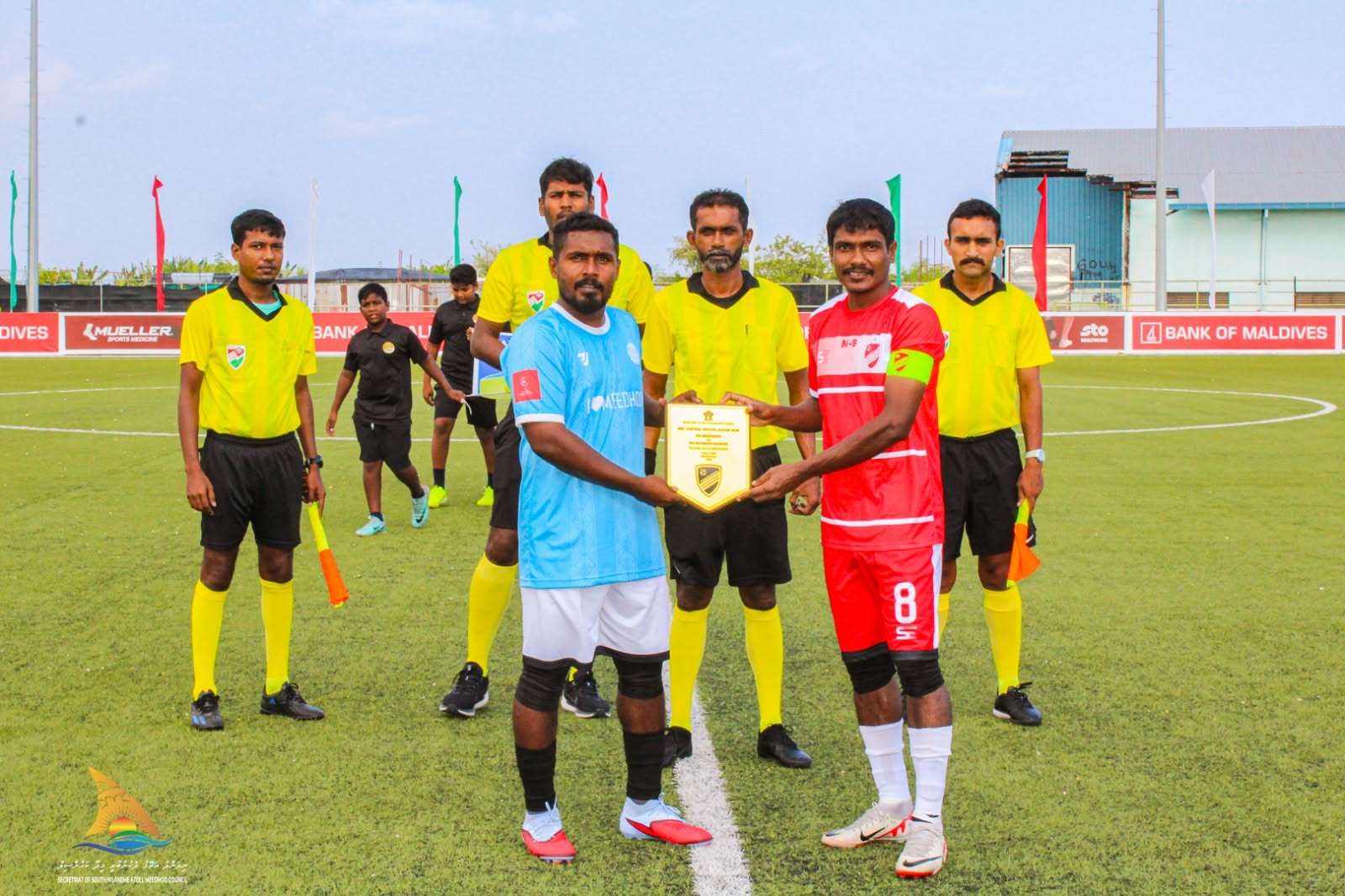
The Football Association of Maldives (FAM) has announced the dates for the 2026/27 Atoll Championship, with registration now open for island teams ahead of the tournament’s scheduled start in October.
The competition is set to begin on 17 October 2026, as FAM continues its efforts to expand football development beyond the capital and provide more opportunities for players in the country’s islands.
Teams wishing to take part have until 20 September 2026 to complete their registration and submit the required documentation.
FAM has introduced a digital registration system for the competition, allowing participating teams to submit their applications and supporting documents online through the association’s competition portal.
The Atoll Championship has become an important part of the Maldivian football calendar, bringing together teams from across the country’s atolls and giving local players an opportunity to compete at a higher level.
The tournament is also viewed as an important pathway for identifying emerging talent outside Malé, with island-based players able to attract attention through performances in the competition.
With registration now underway, island teams have just over two weeks after the September deadline to prepare for the opening of the championship on 17 October.
Further details on the groups and fixtures are expected to be released by FAM following the completion of the registration process.
News
Maldives U20 make winning start with 2-0 victory over Brunei
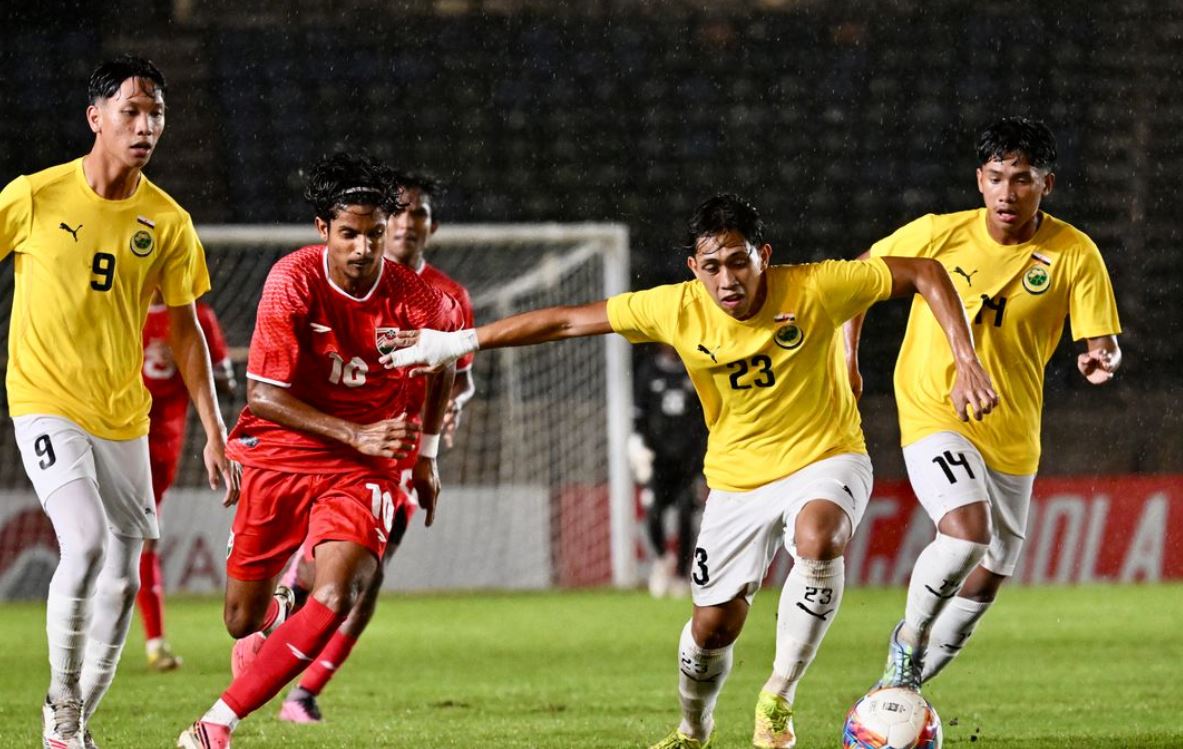
The Maldives began their AFC U20 Asian Cup China 2027 qualifying campaign in impressive fashion, defeating Brunei Darussalam 2-0 in their opening Group K match in Yangon.
Goals from Ethan Zaki and Mohamed Imran inside the opening 32 minutes gave the Maldives a commanding advantage, with the young side then holding firm to secure all three points.
Maldives started brightly and were rewarded for their positive approach when Ethan Zaki opened the scoring in the 20th minute. The early goal settled the team and gave them greater confidence as they continued to press Brunei.
The advantage was doubled just 12 minutes later. Mohamed Imran struck in the 32nd minute to put the Maldives 2-0 ahead before half-time.
Brunei attempted to respond after the break, but the Maldives defence remained organised and disciplined, protecting their two-goal lead through the second half.
The final whistle confirmed a valuable 2-0 victory, giving the Maldives three points and a clean sheet from their opening fixture.
The result also puts the Maldives in a strong position in Group K, which features Myanmar, Sri Lanka and Brunei. Myanmar also began their campaign with a convincing 4-0 victory over Sri Lanka. (AFC)
For the Maldives, attention now turns to Sri Lanka, with the second Group K fixture scheduled for 3 September. The team will be hoping to build on an encouraging opening performance as they continue their bid to progress from the group.

-

 Opinion3 months ago
From the Brink of Extinction to Global Recognition
-

 News3 months ago
Dhidhdhoo Head Coach Moosa Hails Remarkable Qualifying Campaign
-
News3 months ago
Dhidhdhoo Strengthen Qualification Hopes with 3-1 Victory Over Huraa
-

 News3 months ago
Amdhan Ali Calls for Unity and Focus After Afghanistan Defeat
-

 News3 months ago
Gadhdhoo Complete Perfect South Region League Campaign
-

 News3 months ago
Gadhdhoo Secures Dhivehi Premier League Spot After Victory Over TC Sports
-

 News3 months ago
Gadhdhoo Crowned South Region League Champions
-

 News3 months ago
Gadhdhoo One Win Away from BML South Region League Title